





Single-Stage vs Two-Stage Furnace: Which Is Right for Your Home?
Summarize or Share at:
What’s the Difference Between Single-Stage and Two-Stage?
A single-stage furnace has one setting: full power. When your thermostat calls for heat, the furnace fires at 100% until the house reaches the set temperature, then shuts off.
A two-stage furnace has two settings: low and high. On most days it runs on low, usually around 60 to 70% of its full output. It only switches to high when it’s very cold outside or the house needs to warm up quickly.
Think of it like driving. A single-stage furnace is either full throttle or parked. A two-stage furnace can cruise at a steady speed and only speeds up when it needs to.
Most winter days in York Region aren’t the coldest days of the year. That’s why a two-stage furnace spends most of its time on low.
Single-Stage vs Two-Stage at a Glance
| Single-stage | Two-stage | |
|---|---|---|
| Heat output | 100% or off | Low (about 60 to 70%) or high |
| Run cycles | Shorter, more frequent | Longer, steadier |
| Temperature swings | More noticeable | Smaller |
| Noise | Louder start-ups | Quieter on low |
| Up front cost | Lower | Higher |
| Repairs | Simpler, fewer parts | A few more components |
| Thermostat | Standard | Best with a two-stage compatible thermostat |
Single-stage pros
- Lower up front cost
- Simpler design with fewer parts
- A practical choice for smaller, well-insulated homes or a tight budget
Single-stage cons
- Runs at full blast every time, which can mean blasts of hot air followed by cool-downs
- More noticeable temperature swings between rooms and floors
- Louder when it starts up
Two-stage pros
- Steadier, more even temperatures
- Quieter, since it runs on low most of the time
- Longer run times move more air through your filter
- Pairs well with a whole-home humidifier
- Fewer full-power starts
Two-stage cons
- Higher up front cost
- A few more components, so some repairs can cost more
- Needs proper thermostat setup to get the full benefit
Is a Two-Stage Furnace More Efficient?
This is the most common point of confusion.
You may have seen charts showing single-stage furnaces at 80% efficiency and two-stage at 90% or higher. In Ontario, that comparison doesn’t apply. Since July 2019, every new residential gas furnace sold in Canada must be rated at least 95% AFUE. Whether you choose single-stage or two-stage, you’re getting a high-efficiency furnace.
Staging is about how the furnace delivers heat, not its efficiency rating. That said, a two-stage furnace can use a little less energy in practice. Running longer on low means fewer start-ups, and most two-stage models pair with a variable-speed (ECM) blower motor that uses less electricity.
The gas savings between the two are usually modest. The bigger difference most homeowners notice is comfort.
Comfort, Noise, and Air Quality
This is where a two-stage furnace really stands out.
- Fewer hot and cold swings. A single-stage furnace heats quickly, overshoots a little, shuts off, and lets the house cool before starting again. A two-stage furnace runs longer on low, keeping temperatures steadier.
- Better balance between floors. Longer, gentler cycles help heat reach upper floors and rooms farther from the furnace.
- Quieter operation. On low, you’ll hear less burner and blower noise, and fewer loud start-ups.
- Better filtration. More run time means more air passes through your filter each hour.
- More consistent humidity. If you have a whole-home humidifier, longer run times help it keep humidity steadier.
One thing to keep in mind: because the blower runs longer, your filter may need checking and changing a little more often.
Up Front Cost and Repairs
A single-stage furnace costs less to buy and install. A two-stage model costs more, mainly for the two-stage gas valve, a more advanced control board, and usually a variable-speed blower.
On repairs, a two-stage furnace has a few extra parts that can fail, and some of those parts cost more. Diagnosing staging problems also takes a technician who knows these systems. That’s not a reason to avoid two-stage, but it is a reason to choose an installer who will be around to service it.
For many homeowners, the added comfort is worth the difference in cost. For others, especially on a tight budget or planning to move soon, a single-stage furnace is a smart, practical choice.
Why Sizing Matters More Than Staging
Here’s something that often gets missed: a properly sized single-stage furnace can outperform an oversized two-stage furnace.
Many homes have furnaces that are bigger than they need to be. An oversized furnace heats the house too quickly, shuts off, and starts again, over and over. This is called short cycling. It causes uneven heat, extra wear, and more noise, whether the furnace is single-stage or two-stage.
Before recommending any furnace, we look at:
- Heat loss. We calculate how much heat your home loses on the coldest days, based on square footage, insulation, windows, and air tightness.
- Your existing furnace. How it’s been performing, and whether it was oversized.
- Ductwork. Whether your ducts can handle the airflow a new furnace needs, and whether certain rooms are hard to heat.
- Your thermostat. Whether it can control two stages, or whether the furnace will manage staging on its own.
- Comfort concerns. Cold rooms, hot upstairs, noise, dry air, or anything else you’d like to fix.
With that information, we can recommend the right size and the right type, not just the most expensive option.
What About Modulating Furnaces?
A modulating furnace takes the idea a step further. Instead of two settings, it adjusts its output in small steps to closely match what your home needs.
It offers the steadiest temperatures and quietest operation of the three, but also costs the most up front. For many homes, a two-stage furnace hits the sweet spot between comfort and cost. We’re happy to walk you through modulating options if you’re interested.
What Are You Actually Being Quoted?
When you compare furnace quotes, it’s easy to focus on the brand name and the price. But a well-known brand doesn’t tell you what kind of furnace you’re getting.
Most manufacturers, including big names like Lennox, make several lines of furnaces, from entry-level single-stage models to two-stage and modulating models. Two quotes with the same brand name on them can be for very different equipment. A lower price may simply mean a single-stage furnace with a basic blower, which is a perfectly good choice for some homes but isn’t the same as a two-stage system.
How to check what you’re being quoted
- Find the model number on the quote. A detailed quote should list the exact furnace model number, not just the brand and size. If it doesn’t, ask for it.
- Look up the model number. Search the model number on the manufacturer’s website and open its product page or specification sheet. Look for words like “single-stage,” “two-stage,” or “modulating” in the product description.
- Check the blower motor. The spec sheet will also list the blower type. “Variable speed” usually offers quieter operation and better airflow control than a standard multi-speed motor.
- Check the size. The input rating, in BTUs per hour, shows how big the furnace is. Ask how that size was chosen for your home.
- Check the rating plate after installation. Every furnace has a rating plate, usually inside the front access door. It lists the model number, serial number, and input rating. Make sure the model number matches your quote.
Questions worth asking any contractor
- Is this furnace single-stage, two-stage, or modulating?
- What type of blower motor does it have?
- How did you determine the furnace size for my home?
- Will my thermostat work with this furnace, or does it need to be upgraded?
- What warranty comes with it, and does it need to be registered?
How we quote
Our technicians will always explain the equipment you’re getting. Every quote lists the exact model, whether it’s single-stage, two-stage, or modulating, the blower type, and the size we recommend for your home and why. If you have a quote from someone else and want help understanding it, we’re happy to walk through it with you.
Which Furnace Is Right for You?
A single-stage furnace may be the right fit if:
- You want the lowest up front cost
- Your home is smaller or well insulated
- You’re planning to move in the next few years
- You’re replacing a furnace in a rental property
A two-stage furnace may be the right fit if:
- You notice hot and cold spots or uneven heat between floors
- You want quieter operation
- You have a larger or two-storey home
- You have a whole-home humidifier or plan to add one
- You plan to stay in your home for years
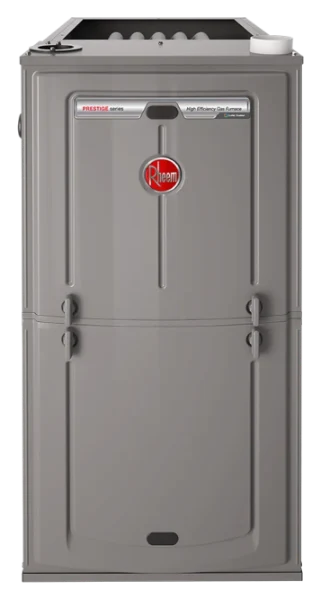
We install single-stage, two-stage, and modulating furnaces from Rheem, SureComfort, and Goodman, and we’ll help you choose the one that fits your home and budget.
Every new furnace also needs regular care. Markham Heating Protection Plan members receive an annual furnace tune-up as part of their membership.
Book a Furnace Consultation
Not sure which furnace is right for you? Our licensed technicians serve homes across York Region, including Markham, Richmond Hill, Stouffville, Unionville, and Thornhill. We’ll look at your home, your ductwork, and your comfort concerns, and give you a clear, honest recommendation.