


What to Do If Your Furnace or Gas Appliance Is Red Tagged
Learn what a red tag means in Ontario, the difference between Type A and Type B violations, and the steps Markham Heating and Air Conditioning takes to get your gas appliance safe and your tag cleared.
Summarize or Share at:
A technician just put a red tag on your furnace. Now what?
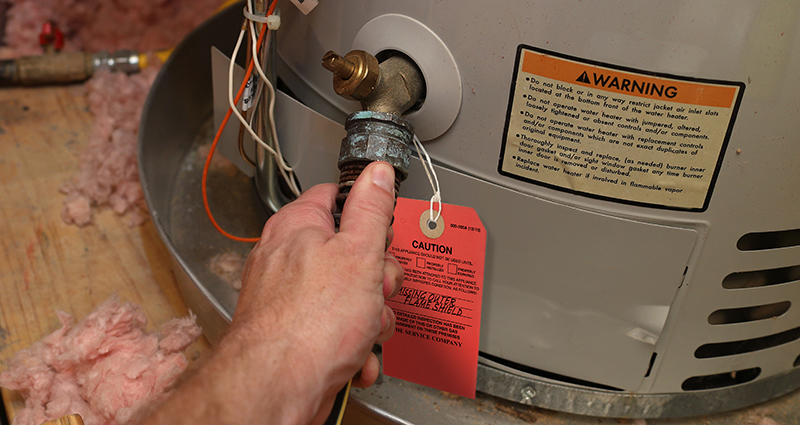
First, don’t panic. A red tag means a gas appliance in your home has a safety problem that needs to be fixed before it can be used again. It’s not a fine, and it doesn’t mean you did something wrong. It’s a safety measure, and it can be resolved.
Here’s what a red tag means, why appliances get tagged, and what it takes to get yours cleared.
What is a red tag?
A red tag is a safety violation notice placed on a gas appliance that isn’t safe to operate. It’s issued when a licensed gas technician or your gas utility finds a condition that doesn’t meet Ontario’s gas safety code.
Red tags aren’t just for furnaces. They can be issued for:
- Water heaters
- Boilers
- Gas fireplaces
- Gas ranges and dryers
- Venting, chimneys, and gas piping
In Ontario, gas appliance safety is overseen by the Technical Standards and Safety Authority (TSSA), and installations must meet the CSA B149 gas installation code. When a technician finds an unsafe condition, they’re required to tag it. It isn’t a judgment call or an optional recommendation.
The reason is simple. Problems with gas appliances can lead to:
- Carbon monoxide (CO) exposure. When gas doesn’t burn cleanly or exhaust isn’t vented properly, carbon monoxide can build up. You can’t see, smell, or taste it.
- Fire or explosion. A gas leak or a cracked component can create a serious fire risk.
- Backdrafting. A blocked, corroded, or poorly installed vent can push exhaust back into your living space instead of outside.
What’s the difference between Type A and Type B?
There are two types of red tags, and they tell you how urgent the problem is.
Type A: Immediate hazard The appliance is dangerous right now. The gas supply is shut off right away, either to the appliance or to the whole home. A carbon monoxide leak or an active gas leak are common examples.
Type B: Non-immediate hazard The appliance has a problem that needs to be fixed, but it isn’t an immediate danger. Your gas stays on for now, but you have a set period to repair or replace the equipment. Enbridge Gas currently allows up to 42 days. If the repair isn’t completed and reported in time, your gas service can be shut off.
Check the tag itself for the violation type and the deadline. If you’re not sure what it says, we can read it with you.
Why do gas appliances get red tagged?
A red tag can come from an annual tune-up, a utility inspection, a home sale inspection, or a service call for something unrelated. Common reasons include:
- Cracked heat exchanger. A crack can allow combustion gases, including carbon monoxide, to mix with the air circulating through your home.
- Venting problems. Blocked, disconnected, corroded, or undersized vents can stop exhaust from leaving the home safely.
- Gas leaks. Any leak at a fitting, valve, or pipe needs immediate attention.
- Combustion problems. Poor combustion can produce harmful byproducts and make the appliance unsafe to run.
- Improper installation. Equipment that wasn’t installed to code, or that no longer meets current code, can be tagged.
- Lack of combustion air. Appliances need enough air to burn fuel safely. Renovations that close off a furnace room can sometimes cause this.
What should you do if you’ve been red tagged?
- Stop using the appliance. Once it’s tagged, it’s not safe to operate. Don’t remove the tag or try to restart the equipment yourself.
- Check your CO alarms. Make sure your carbon monoxide alarms are installed and working. If an alarm sounds or anyone feels unwell, leave the home and call 911.
- Call a licensed gas technician. Contact Markham Heating or another TSSA-registered contractor. Your gas utility doesn’t perform the repairs.
- Get a clear assessment. Your technician should inspect the appliance, explain what caused the tag, and walk you through your options, whether that’s a repair or a replacement.
- Have the work completed. Once you decide on the right fix, the repair or replacement is carried out to code.
Make sure the repair is reported. Your contractor sends confirmation of the completed work to your gas utility so the violation is closed and your service isn’t interrupted.
How does a red tag get cleared?
A red tag is cleared when a licensed contractor corrects the unsafe condition and the gas utility is notified that the work is done.
When we handle a red tag, we:
- Inspect the appliance and confirm the cause of the violation
- Explain what needs to be corrected and what your options are
- Complete the repair or replacement to code
- Test the appliance to confirm it’s operating safely
- Send confirmation of the completed work to Enbridge Gas
For Type B violations, Enbridge may also schedule its own follow-up visit to verify the repair.
Sometimes a repair makes sense. Other times, especially with a cracked heat exchanger on an older furnace, replacement may be the more practical choice. Either way, we’ll give you an honest picture so you can decide what’s right for your home.
Can you prevent a red tag?
Not every red tag can be prevented. Codes change, and some parts wear out without warning. But regular maintenance gives a technician the chance to spot many issues early, before they turn into a safety violation or a no-heat call in January.
An annual tune-up includes safety checks like a carbon monoxide reading, a heat exchanger inspection, gas pressure testing, and a venting review.
Markham Heating Protection Plan members receive an annual tune-up as part of their membership, which makes it easier to stay on top of routine care.
Learn more about Markham Heating’s Protection Plans
Get your red tag cleared
Our licensed gas technicians serve Markham, Richmond Hill, Stouffville, Unionville, Thornhill, and surrounding communities. Call us or send us an email for a free estimate on your red tag repair.